

200-301 Practice Cisco Verified Answers - Pass Your Exams For Sure! [2026]
Valid Way To Pass CCNA's 200-301 Exam
Who should take the 200-301 CCNA Exam: Cisco Certified Network Associate
This certification is for a Network Engineers who has to handle the systems and documentation that are required for audits and compliance and if the professionals must actively participate in the disaster recover development, exercises, and actual events. They should know how to implement new network and Infrastructures initiatives across various departments. The Associate Network Engineer has to coordinate with the staff to maintain quality and maintainable systems. They have to push for new capabilities that can come in handy for the users.
The professional must locate the areas of improvement for supportability. They have to be instrumental in technical work for one or more projects. The Associate Network Engineer verifies the rollout plans before the corporate release. They must ensure everyone works within the change control guidelines. The professional acts as the primary point of contact for the IT and System support teams. The Network Engineer must monitor all network equipment to ensure peak functionality.
The Associate Network Engineer provides technical support for the design and deployment of network solution. They play a prominent role in the building configuration and deploying network equipment. The professional takes care of the Cisco network hardware and iOS software that needs a regular update. The Network Engineer has to examine networking solutions and improve the resiliency of the current network environment.
NEW QUESTION # 108
Refer to the exhibit.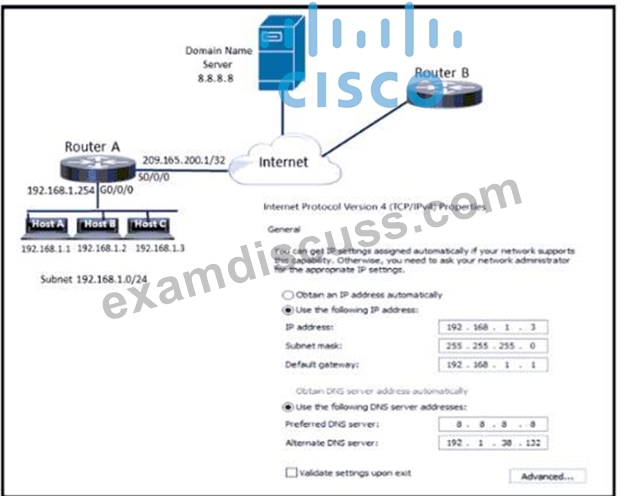
Which configuration parameter is preventing host C from reaching the internet?
- A. default gateway
- B. IP addressss assignment
- C. automatic DNS
- D. IP network mask
Answer: A
Explanation:
default gateway. IP services questions are about the supporting protocols that make a network manageable and usable: DHCP supplies addressing information, DNS resolves names, NAT translates address spaces, NTP synchronizes time, syslog records events, SNMP monitors devices, and QoS classifies or prioritizes traffic. Cisco IOS commands are precise; a similar-looking command can configure a client, a relay, a pool, or a server role depending on context. The incorrect options typically name real services but solve a different operational problem. Cisco CCNA 200-301 v1.1 includes these topics because production networks fail just as often from broken services as from broken routing. The chosen answer is the one that performs the exact function in the scenario, whether that is file transfer, address assignment, logging level selection, monitoring security, or traffic treatment.
NEW QUESTION # 109
Refer to the exhibit.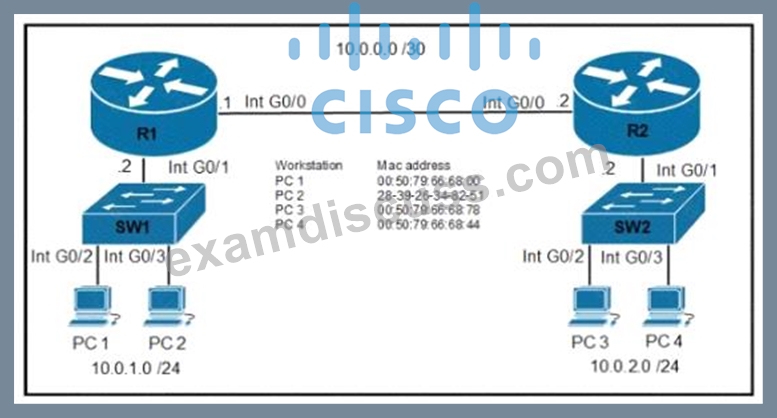
An engineer must configure the interface that connects to PC 1 and secure it in a way that only PC1 is allowed to use the port No VLAN tagging can be used except for a voice VLAN. Which command sequence must be entered to configure the switch?
- A.

- B.

- C.

- D.

Answer: C
NEW QUESTION # 110
Drag and drop the threat-mitigation techniques from the left onto the types of threat or attack they mitigate on the right.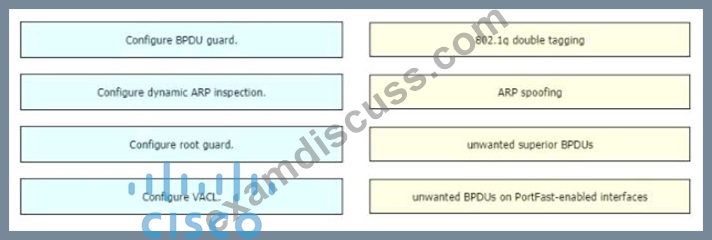
Answer:
Explanation: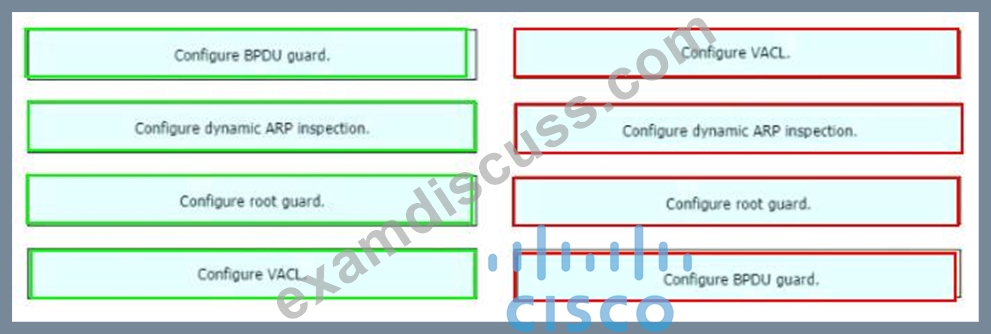
NEW QUESTION # 111
Refer to the exhibit.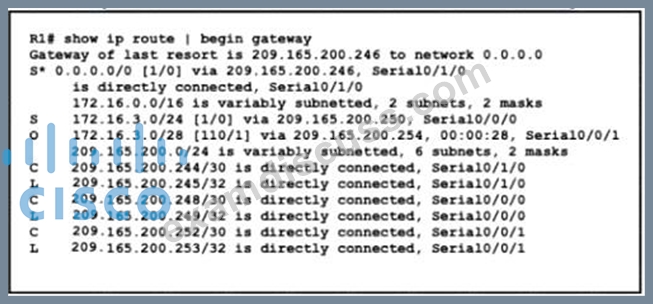
A packet is being sent across router R1 to host 172.16.0.14. What is the destination route for the packet?
- A. 209.165.200.250 via Serial0/0/0
- B. 209.165.200.254 via Serial0/0/1
- C. 209.165.200.246 via Serial0/1/0
- D. 209.165.200.254 via Serial0/0/0
Answer: C
NEW QUESTION # 112 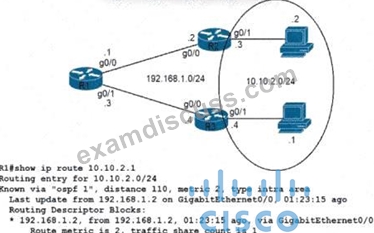
Refer to the exhibit. Traffic from R1 to the 10.10.2.0/24 subnet uses 192.168.1.2 as its next hop. A network engineer wants to update the R1 configuration so that traffic with destination 10.10.2.1 passes through router R3, and all other traffic to the 10.10.2.0/24 subnet passes through R2.
Which command must be used?
- A. ip route 10.10.2.1 255.255.255.255 192.168.1.4 100
- B. ip route 10.10.2.1 255.255.255.255 192.168.1.4 115
- C. ip route 10.10.2.0 255.255.255.0 192.168.1.4 100
- D. ip route 10.10.2.0 255.255.255.0 192.168.1.4 115
Answer: B
Explanation:
ip route 10.10.2.1 255.255.255.255 192.168.1.4 115. Cisco routing logic is deterministic: a router first matches the most specific destination prefix, then uses administrative distance when competing route sources advertise the same prefix, and finally evaluates the protocol metric when multiple paths remain inside the same routing protocol. First-hop redundancy protocols add a separate default-gateway resiliency function for hosts on a LAN. The other choices in this question either point to the wrong route-selection rule, confuse a protocol metric with administrative distance, or apply a Layer 2 concept where a Layer 3 forwarding decision is required. In production, that mistake would create blackholing, asymmetric routing, or a backup path that never activates. Cisco CCNA 200-301 v1.1 tests this because route selection is fundamental to troubleshooting reachability. The selected answer matches the behavior Cisco routers use when forwarding traffic or maintaining gateway redundancy.
NEW QUESTION # 113
Drag and Drop Question
Drag and drop the functions of DHCP from the left onto any of the positions on the right Not all functions are used.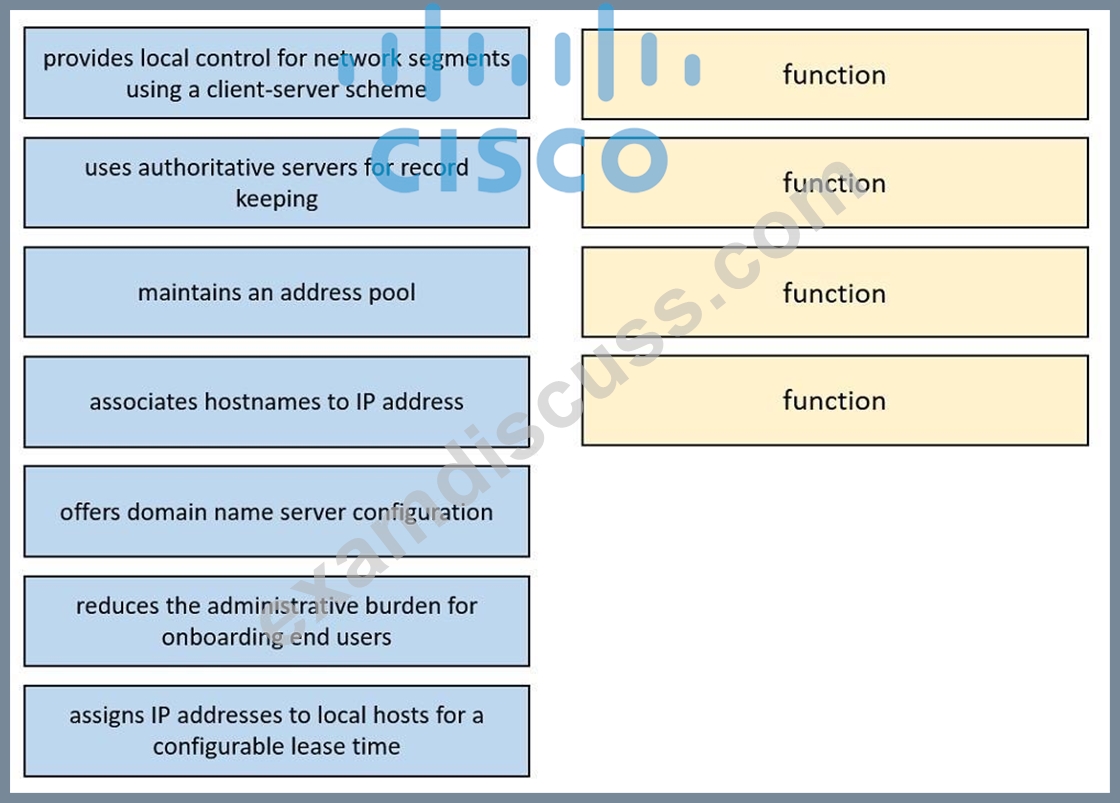
Answer:
Explanation: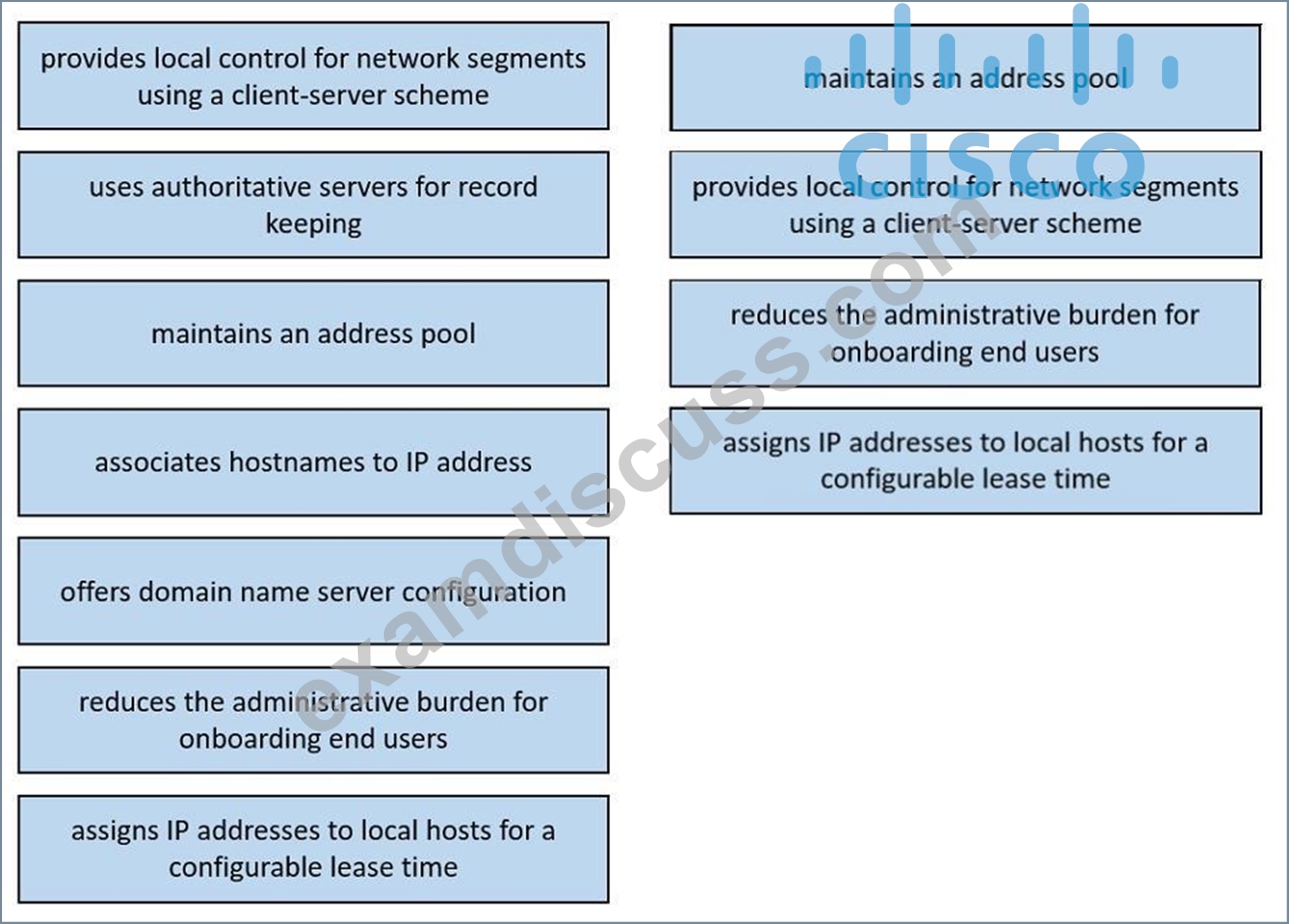
NEW QUESTION # 114
Refer to the exhibit.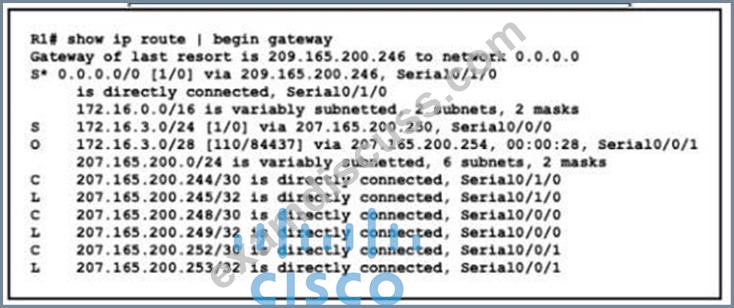
A packet is being sent across router R1 to host 172.163.3.14. To which destination does the router send the packet?
- A. 207.165.200.254 via Serial0/0/0
- B. 207.165.200.254 via Serial0/0/1
- C. 207.165.200.250 via Serial/0/0/0
- D. 207.165.200.246 via Serial0/1/0
Answer: D
NEW QUESTION # 115
Refer to the exhibit.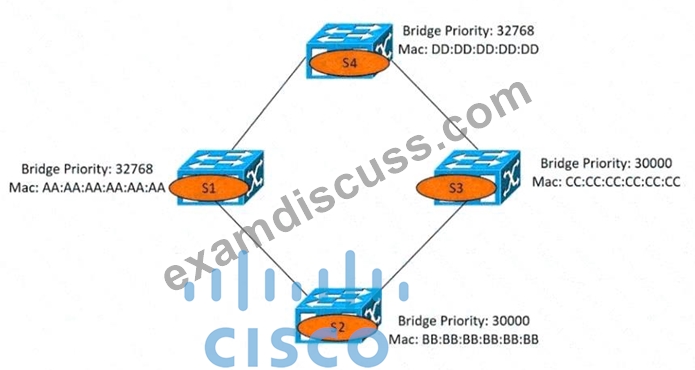
Which switch becomes the root bridge?
- A. S3
- B. S2
- C. S4
- D. S1
Answer: B
NEW QUESTION # 116
Refer to the exhibit. What is a reason for poor performance on the network interface?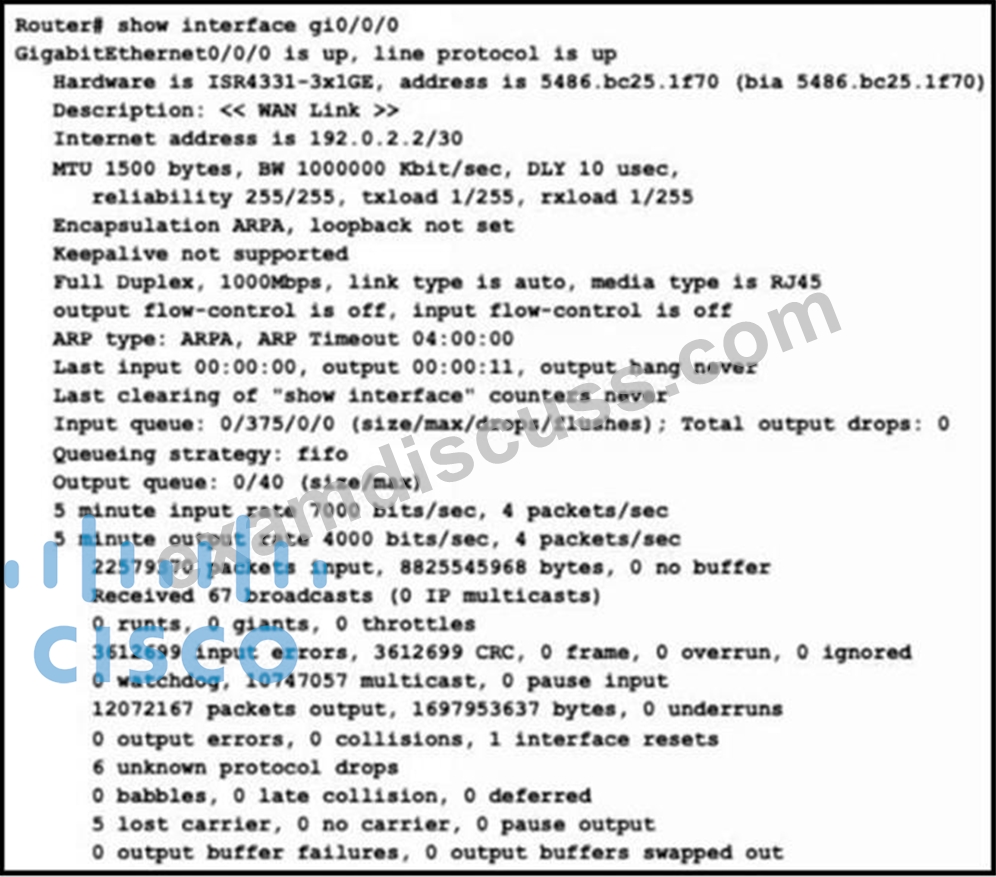
- A. The interface is receiving excessive broadcast traffic.
- B. The bandwidth setting of the interface is misconfigured
- C. The cable connection between the two devices is faulty.
- D. The interface is operating at a different speed than the connected device.
Answer: C
Explanation:
Here we see a large number of input errors and CRC errors.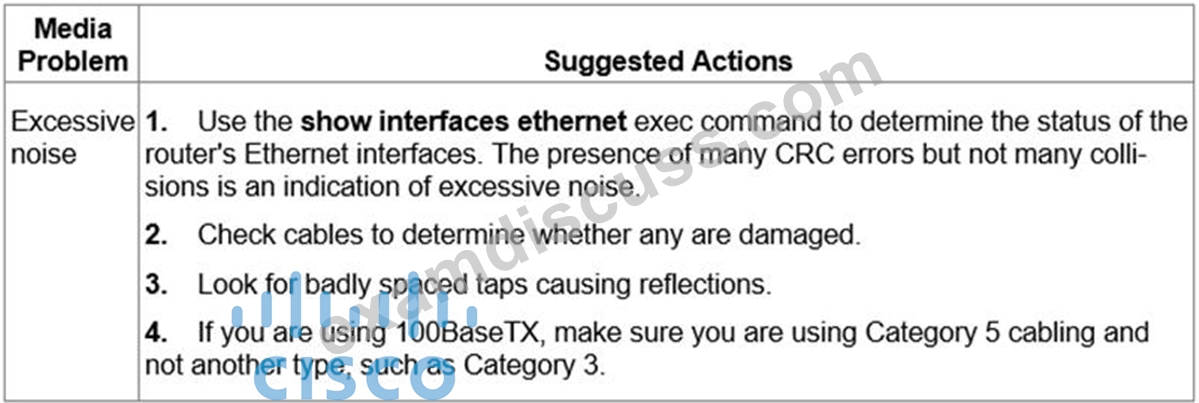
NEW QUESTION # 117
Drag and drop the AAA functions from the left onto the correct AAA services on the right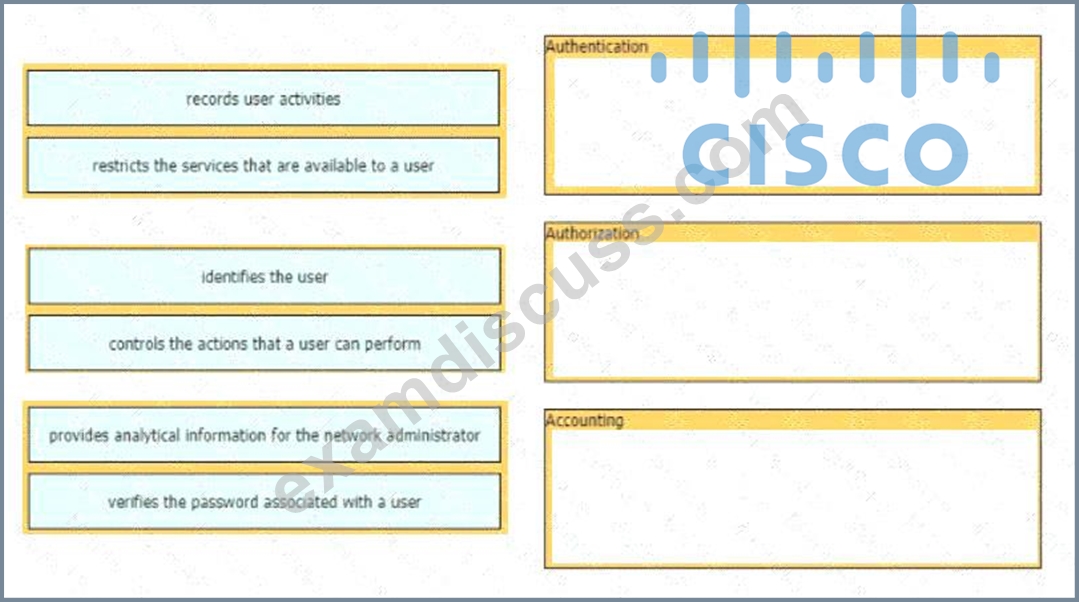
Answer:
Explanation: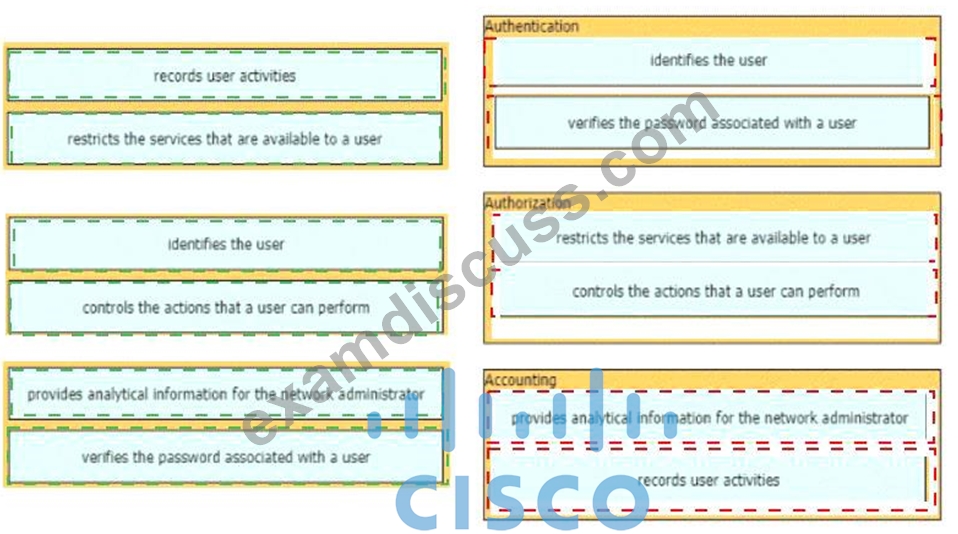
Explanation: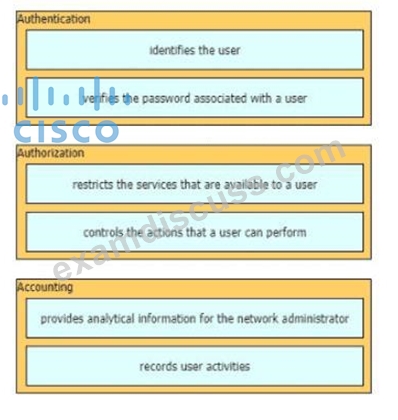
NEW QUESTION # 118
Drag and Drop Question
Drag and drop the TCP/IP protocols from the left onto their primary transmission protocols on the right.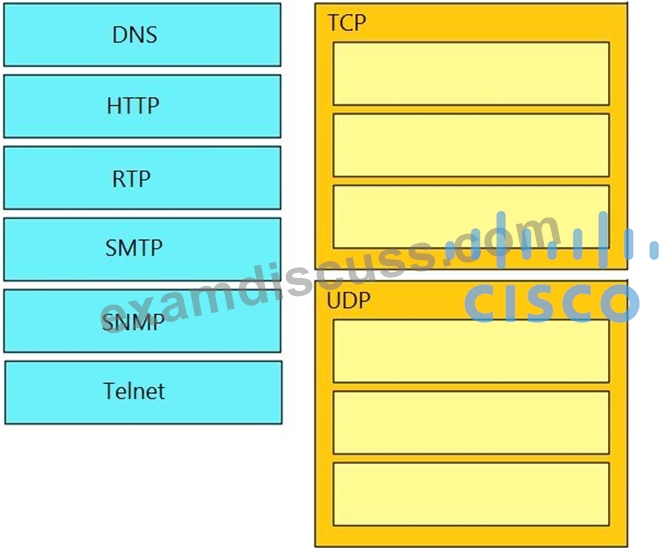
Answer:
Explanation: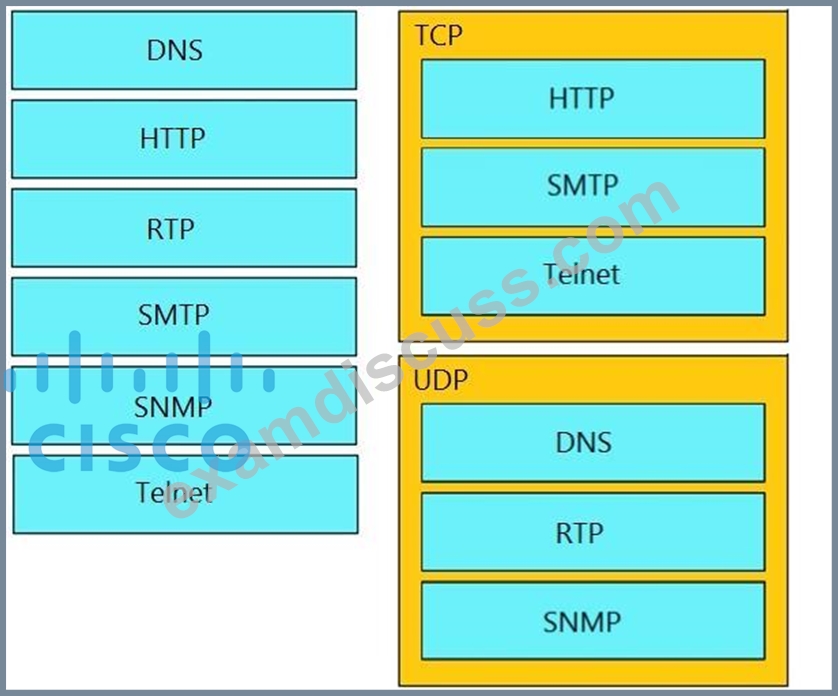
NEW QUESTION # 119
Drag and Drop Question
Refer to the exhibit. Drag and drop the learned prefixes from the left onto the subnet masks on the right.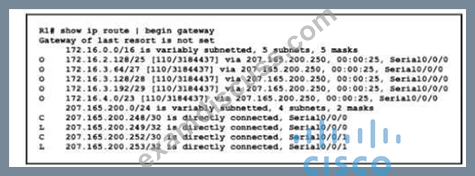
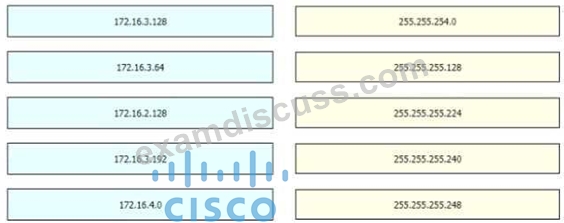
Answer:
Explanation: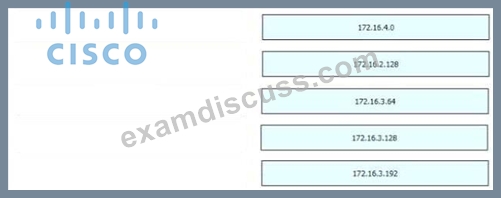
NEW QUESTION # 120 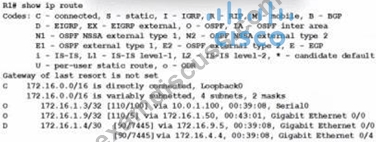
Refer to the exhibit. How does router R1 handle traffic to the 172.16.1.4/30 subnet?
- A. It sends all traffic over the path via 10.0.1.100
- B. It sends all traffic over the path via 172.16.4.4.
- C. It sends all traffic over the path via 172.16.9.5 using 172.16.4.4 as a backup.
- D. It load-balances traffic over 172.16.9.5 and 172.16.4.4.
Answer: D
NEW QUESTION # 121
Drag and drop the characteristics of northbound APIs from the left onto any position on the right. Not all characteristics are used.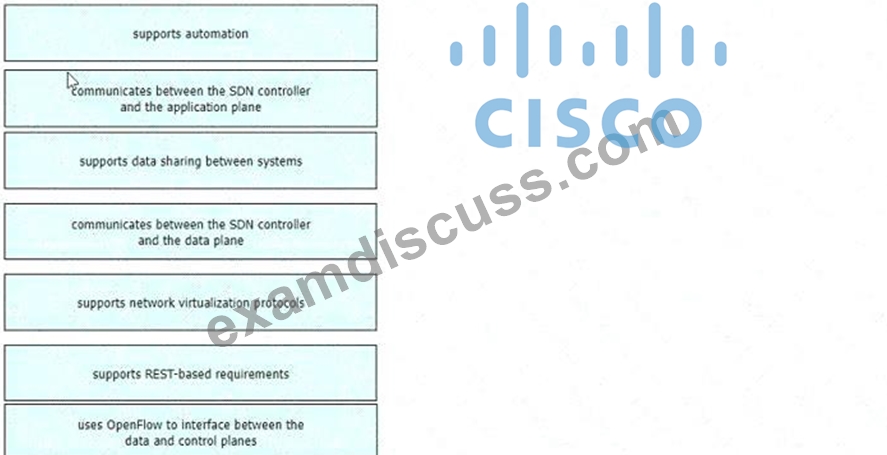
Answer:
Explanation: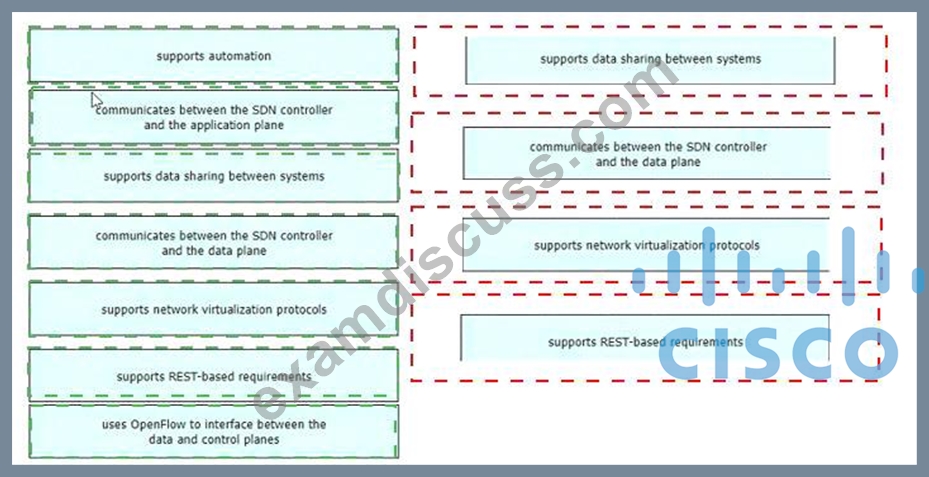
Explanation: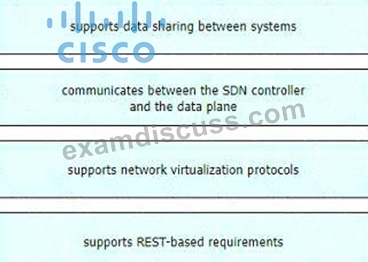
NEW QUESTION # 122
Drag and drop the application protocols from the left onto the transport protocols that it uses on the right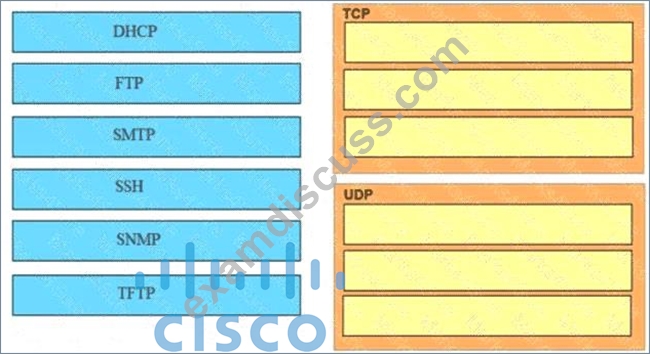
Answer:
Explanation: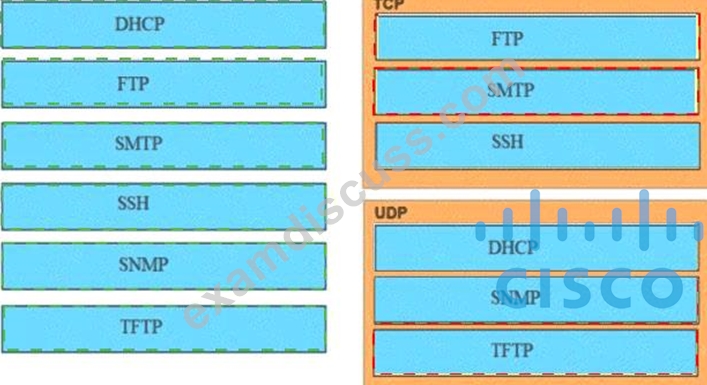
Explanation: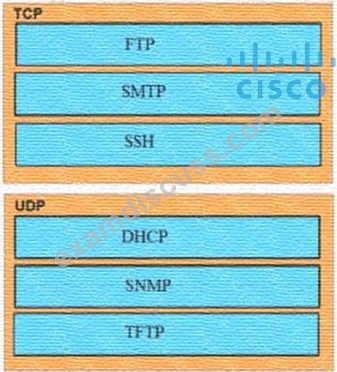
NEW QUESTION # 123
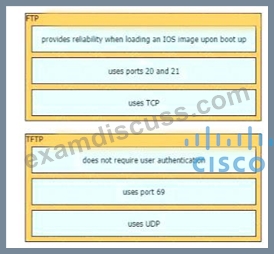
Drag and drop the descriptions of file-transfer protocols from the left onto the correct protocols on the right.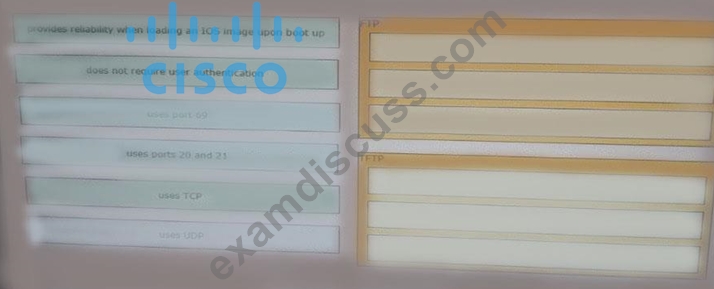
Answer:
Explanation: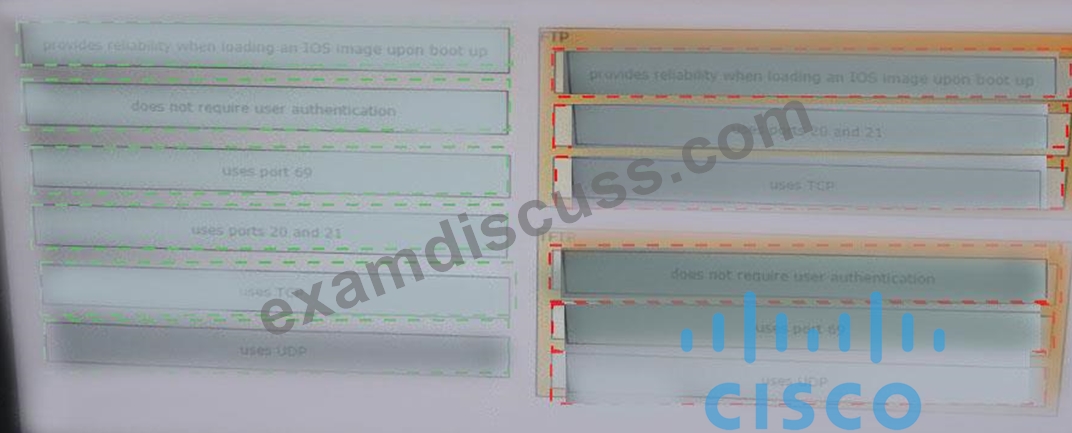
NEW QUESTION # 124
How does Cisco DNA Center gather data from the network?
- A. The Cisco CLI Analyzer tool gathers data from each licensed network device and streams it to the controller
- B. Devices use the call-home protocol to periodically send data to the controller
- C. Network devices use different services like SNMP, syslog, and streaming telemetry to send data to the controller
- D. Devices establish an IPsec tunnel to exchange data with the controller
Answer: C
Explanation:
Section: Automation and Programmability
NEW QUESTION # 125
Drag and drop the AAA features from the left onto the corresponding AAA security services on the right. Not all options are used.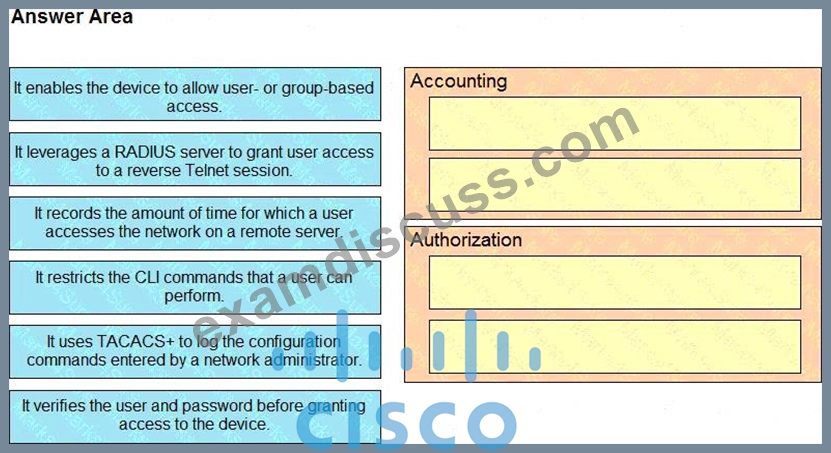
Answer:
Explanation: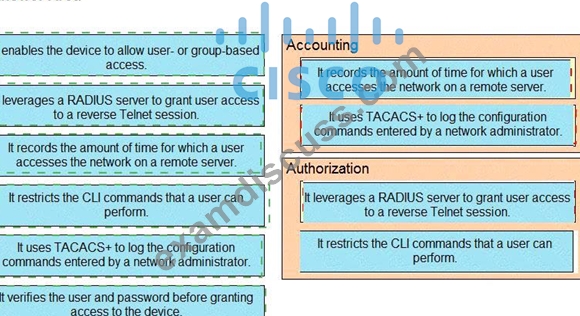
Explanation: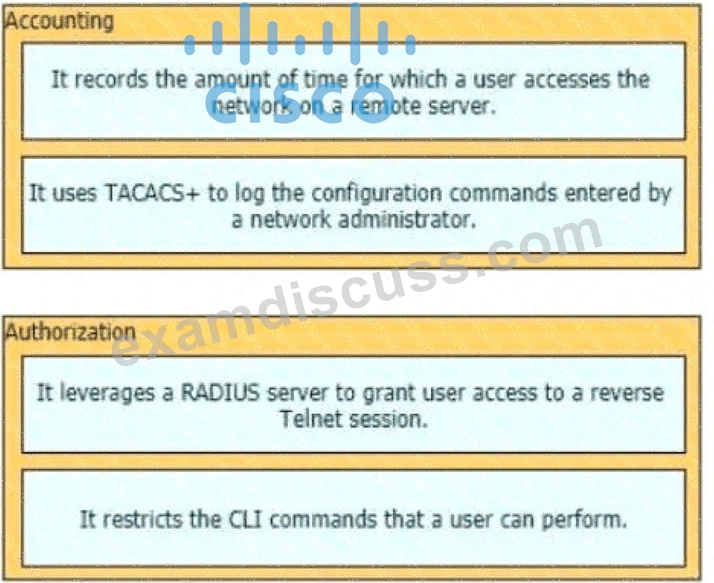
NEW QUESTION # 126
Refer to the exhibit.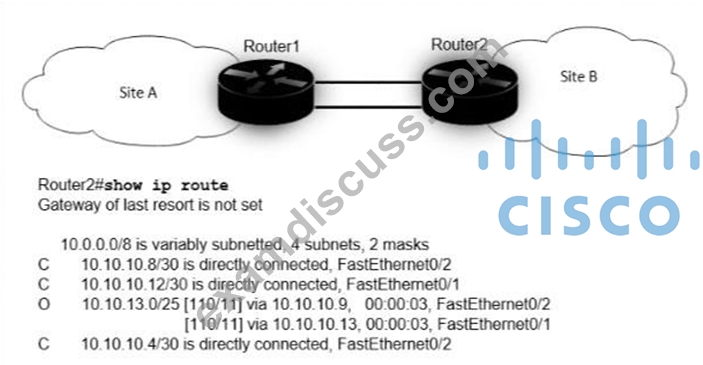
If OSPF is running on this network, how does Router 2 handle traffic from Site B to 10.10.13/25 at Site A?
- A. It load-balances traffic out of Fa0/1 and Fa0/2
- B. It cannot send packets to 10.10.13 128/25
- C. It sends packets out of interface Fa0/1 only.
- D. It sends packets out of interface Fa0/2 only.
Answer: B
Explanation:
Explanation
Router2 does not have an entry for the subnet 10.10.13.128/25. It only has an entry for 10.10.13.0/25, which ranges from 10.10.13.0 to 10.10.13.127.
NEW QUESTION # 127
Refer to the exhibit.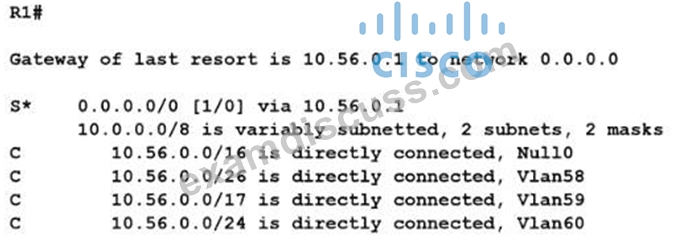
When router R1 receives a packet with destination IP address 10.56.0 62. through which interface does it route the packet?
- A. Null0
- B. Vlan58
- C. Vlan59
- D. Vlan60
Answer: B
Explanation:
Vlan58. IP services questions require matching the service to its exact operational role, such as logging, address assignment, file transfer, monitoring, redundancy, or traffic treatment. Cisco CCNA 200-301 v1.1 includes this under Network Access, where the expected skill is to identify the feature that actually creates the observed behavior or meets the configuration goal. The wording usually contains the decisive clue: a prefix length, a VLAN role, a protocol version, a wireless security standard, or a management-plane function. The distractors are real technologies, but they solve different infrastructure problems. In an operational network, choosing the wrong option would typically cause failed connectivity, insecure management, poor wireless behavior, or incorrect forwarding. The selected answer matches the Cisco configuration model and is retained as the verified answer.
NEW QUESTION # 128
Refer to the exhibit.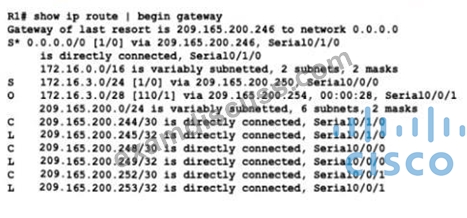
A packet is being sent across router R1 to host 172.16.0.14. What is the destination route for the packet?
- A. 209.165.200.250 via Serial0/0/0
- B. 209.165.200.254 via Serial0/0/1
- C. 209.165.200.246 via Serial0/1/0
- D. 209.165.200.254 via Serial0/0/0
Answer: B
NEW QUESTION # 129
......
Cisco 200-301 Pre-Exam Practice Tests | ExamDiscuss: https://www.examdiscuss.com/Cisco/exam/200-301/
200-301 practice test questions, answers, explanations: https://drive.google.com/open?id=1K0XUfHFf4Q898FAWvWioR9QsgDmzRTxn